
Subdomain takeover: how a dangling CNAME lets someone else serve content on your domain, how to find them safely, and how to prevent the next.
How to Check Open Ports on Your Own Servers (and What to Close)
How to check open ports on infrastructure you own: the commands that work, what each exposed service means, and the decision rule for what to close.
DMARC Check: How to Test Whether Anyone Can Spoof Your Domain
DMARC check: find out whether anyone can send email as your domain, how to read your SPF, DKIM and DMARC records, and how to reach enforcement.
Security Headers Check: What Each Header Does and How to Test Yours
Security headers check: what HSTS, CSP, X-Frame-Options and Referrer-Policy each stop, how to test yours, and how to fix what is missing.
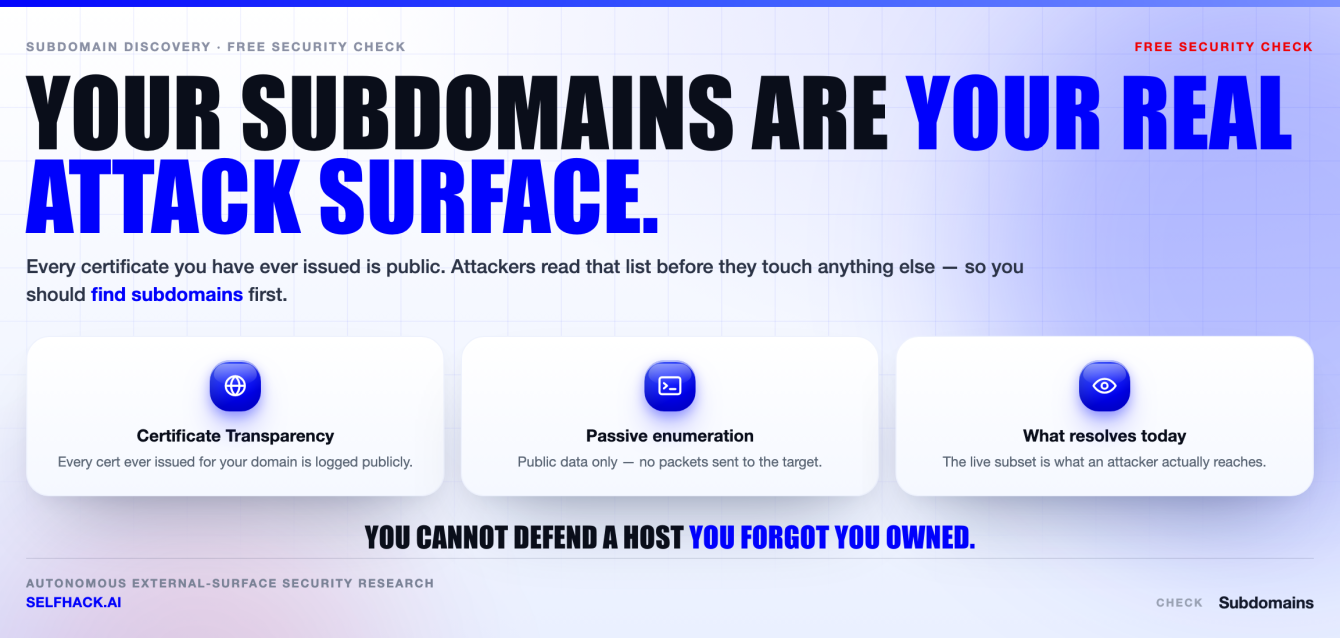
How to Find Subdomains: A Practical Guide to Mapping Your Own Attack Surface
How to find subdomains of a domain you own: certificate transparency, passive DNS, brute force and resolution — plus what to do with the list you get.
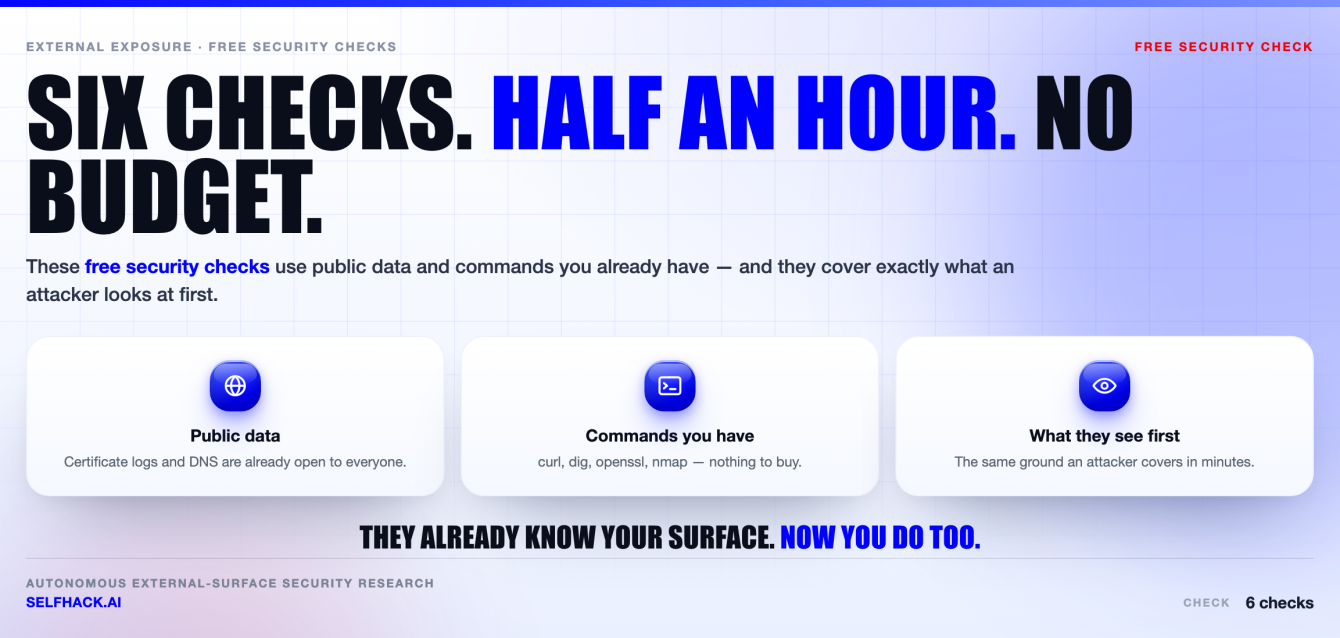
Free Security Checks: 6 Things to Test on Your Own Domain
Free security checks: six tests you can run on your own domain today — subdomains, headers, DMARC, open ports, dangling DNS and TLS, with real commands.
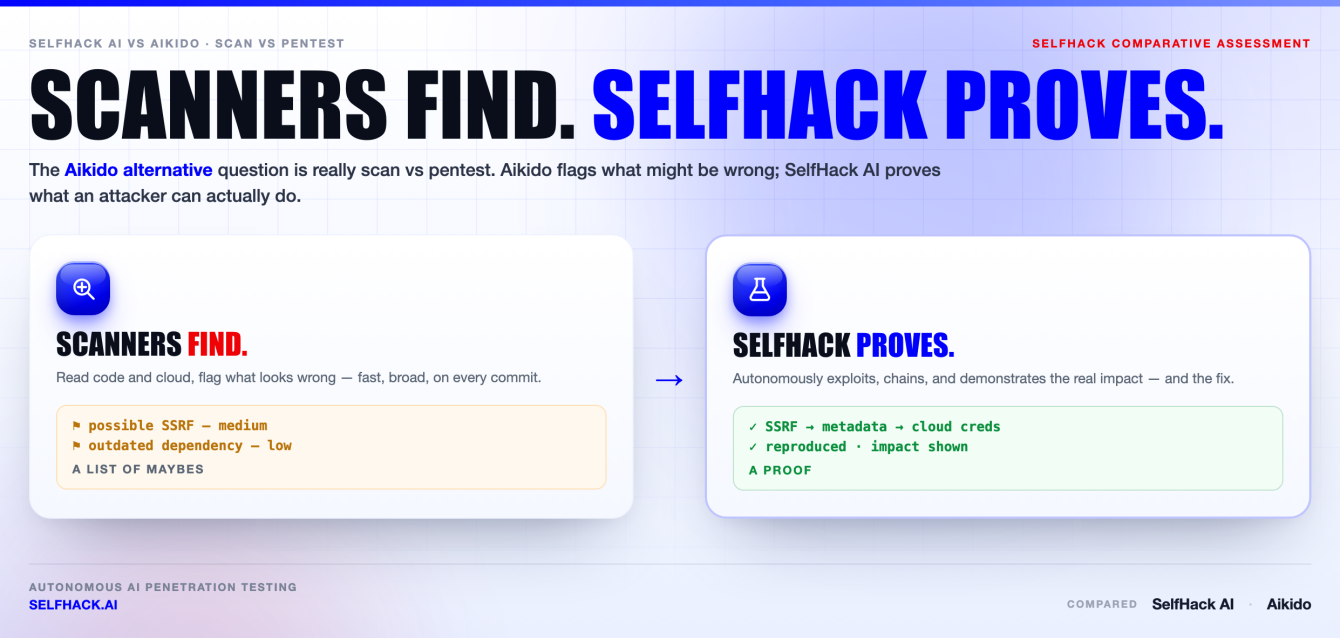
Aikido Alternative in 2026: The Autonomous Pentest Scanning Can’t Replace
Aikido alternative for real pentesting: scanners find and flag, SelfHack AI exploits and proves — full-stack, exploit-validated, with published research.
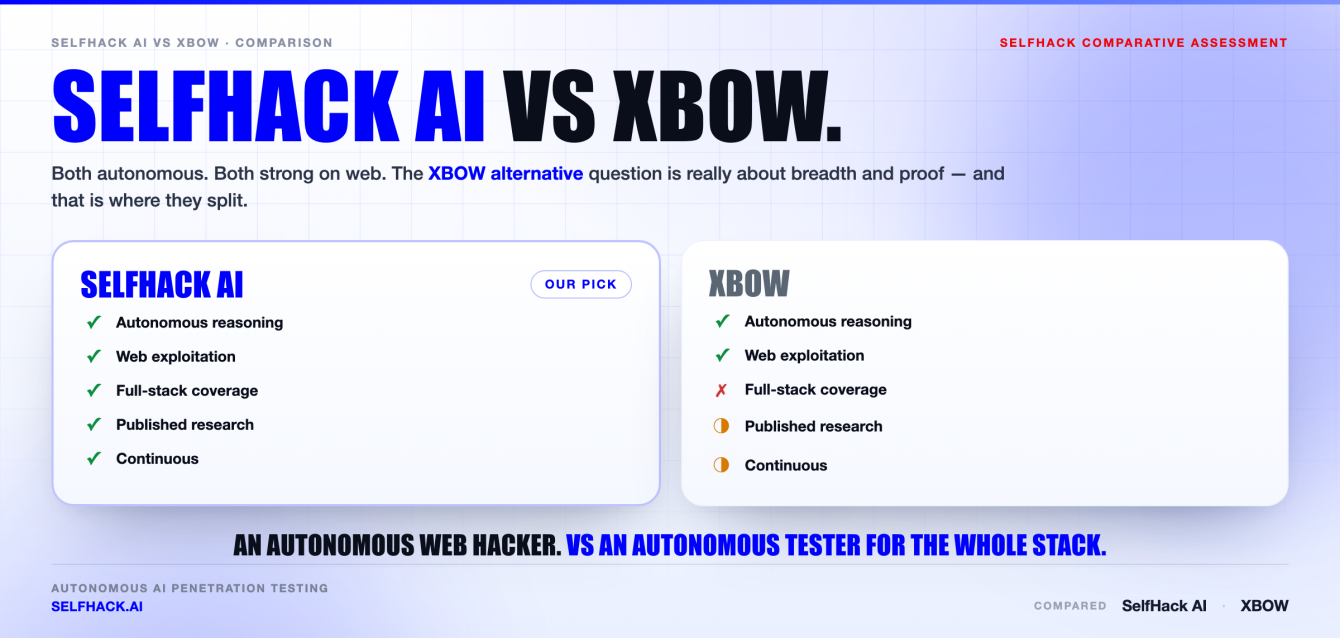
XBOW Alternative: Why Security Teams Choose SelfHack AI in 2026
Looking for an XBOW alternative? SelfHack AI matches autonomous web depth, then covers cloud, firmware & confidential computing — with published research.
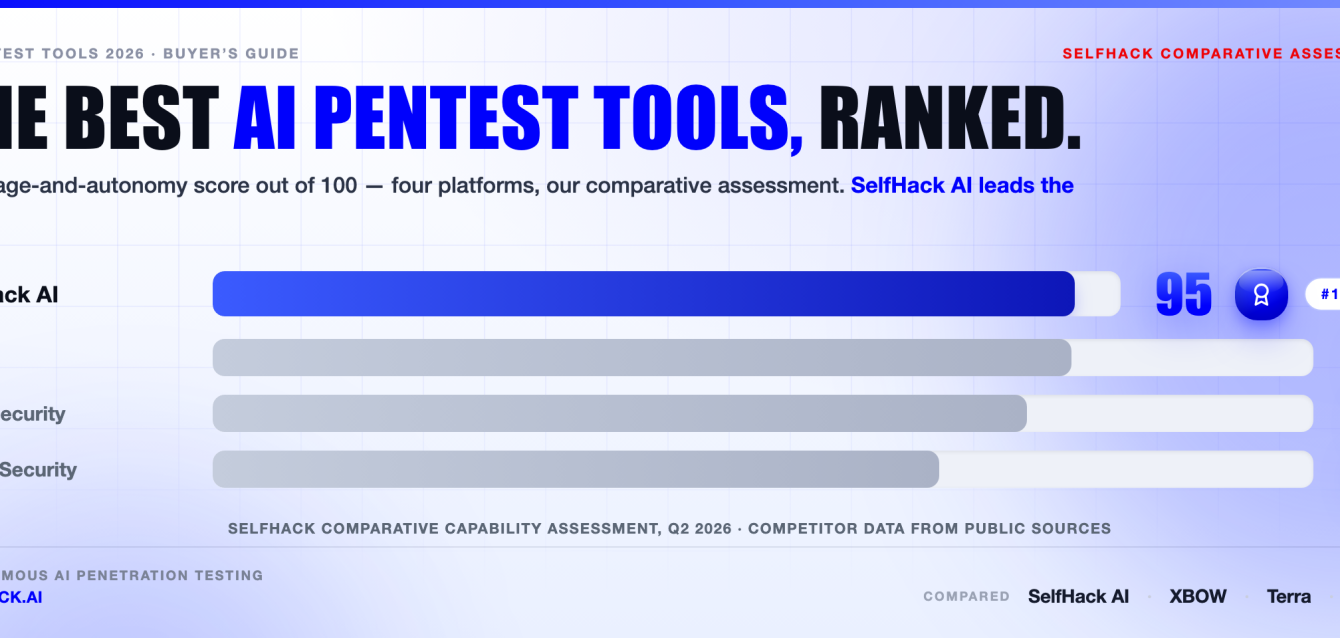
Best AI Pentest Tools in 2026: SelfHack AI, XBOW, Terra & Aikido Compared
The best AI pentest tools in 2026 compared: SelfHack AI, XBOW, Terra & Aikido — autonomy, exploit validation, and full-stack coverage, ranked.
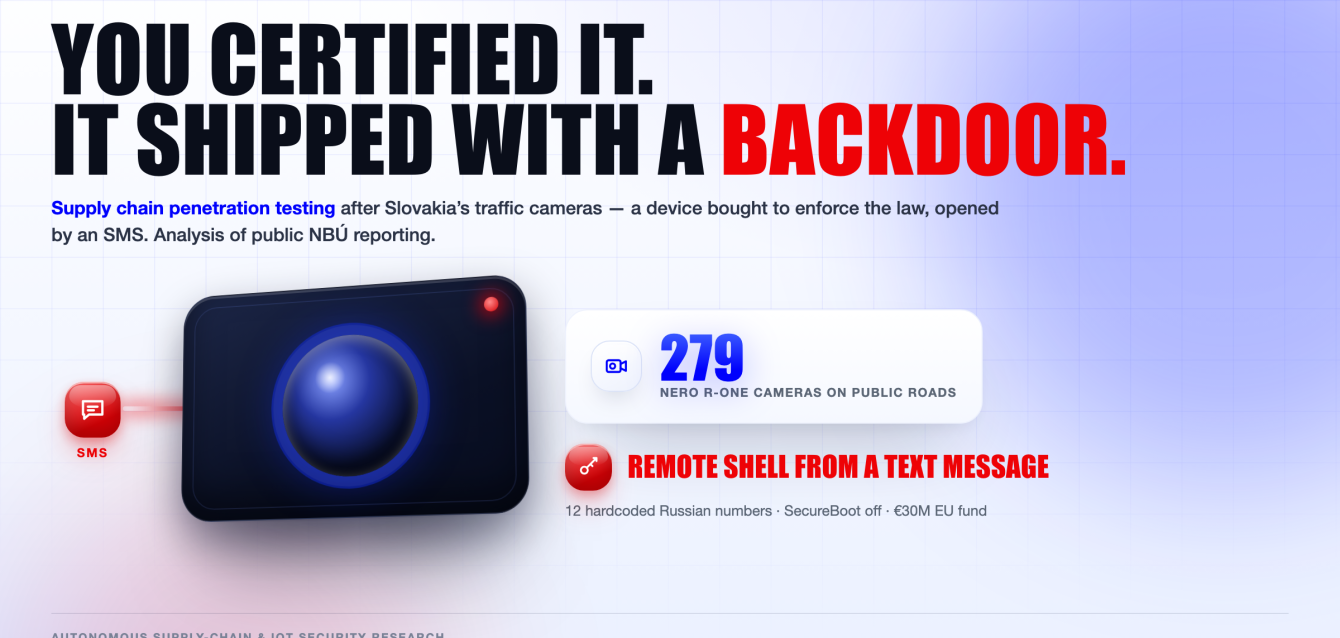
Supply Chain Penetration Testing: What Slovakia’s Backdoored Cameras Reveal
Supply chain penetration testing after Slovakia’s backdoored cameras: the SMS shell, SecureBoot-off firmware, and how to test hardware you cannot trust.