Automated Penetration Testing vs Manual: Which One Protects Your Business Better?
- AI pentesting delivers 92% accuracy with under 3% false positives
- Complete assessments in 3 days vs. 3-6 weeks for traditional firms
- 1000+ autonomous agents test simultaneously across your attack surface
- Audit-ready reports for SOC2, ISO 27001, PCI-DSS compliance
Automated vs Manual Penetration Testing
The cybersecurity landscape has fundamentally shifted. Traditional penetration testing — where a consultant manually probes your systems over several weeks — served its purpose for decades. But modern attack surfaces are too large, too dynamic, and too complex for manual-only approaches.
Automated AI-powered pentesting does not replace human expertise — it amplifies it. SelfHack AI deploys over 1,000 autonomous agents that simultaneously test every attack vector, from web application vulnerabilities to API misconfigurations to cloud infrastructure weaknesses. Each agent specializes in specific CVE categories, OWASP Top 10 vectors, and business logic attack patterns.
Accuracy: The Numbers That Matter
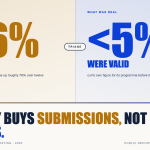
The most critical metric in penetration testing is not how many vulnerabilities you find — it is how many of them are real. False positives waste engineering hours and erode trust between security and development teams.
Data based on publicly available information as of Q1 2026. SelfHack AI stats from internal benchmarks. Competitor pricing may vary — verify with vendors.
SelfHack AI achieves over 92%% detection accuracy because every finding is validated through controlled exploitation. If the AI cannot actually exploit the vulnerability in a sandboxed environment, it does not appear in your report. This exploit-validated approach eliminates the noise that plagues traditional scanning tools.
How AI Penetration Testing Works
SelfHack AI has distilled enterprise-grade pentesting into four simple steps:
Cost Analysis: AI vs Traditional Pentesting
Pentesting has traditionally been expensive, putting comprehensive security testing out of reach for most SMBs. AI-powered testing changes this equation dramatically.
Data based on publicly available information as of Q1 2026. SelfHack AI stats from internal benchmarks. Competitor pricing may vary — verify with vendors.
Feature-by-Feature Comparison
Here is how SelfHack AI stacks up against the leading alternatives across every dimension that matters:
| Feature | SelfHack AI | Pentera | Cobalt | Manual Firm |
|---|---|---|---|---|
| AI-Powered Testing | ✓ | Partial | ✗ | ✗ |
| Exploit Validation | ✓ | ✓ | ✗ | ✓ |
| Delivery Time | 3 days | Real-time | 2 weeks | 3-6 weeks |
| False Positive Rate | <3% | ~10% | ~15% | 5-10% |
| Price (Single App) | €2,200 | €20K+/yr | €6,500 | €15,000+ |
| Audit-Ready Reports | ✓ | ✓ | ✓ | ✓ |
| Business Logic Testing | ✓ | Limited | ✓ | ✓ |
| 24/7 Availability | ✓ | ✓ | ✗ | ✗ |
| No Setup Required | ✓ | ✗ | ✗ | ✗ |
Data based on publicly available information as of Q1 2026. SelfHack AI stats from internal benchmarks. Competitor pricing may vary — verify with vendors.
Frequently Asked Questions
Can automated pentesting replace manual testers entirely?
For 90%% of standard security assessments, yes. AI agents cover more attack surface faster and more consistently. For highly specialized scenarios like advanced social engineering or novel zero-day research, human expertise remains valuable.
Is this suitable for regulated industries?
Absolutely. SelfHack AI generates audit-ready reports with CVSSv3 scoring, detailed exploit traces, and step-by-step remediation guidance that satisfy SOC 2, ISO 27001, PCI-DSS, and GDPR compliance requirements.
What is the minimum engagement size?
The Standard package starts at EUR 2,200 for a single application assessment, making enterprise-grade pentesting accessible to startups and SMBs.